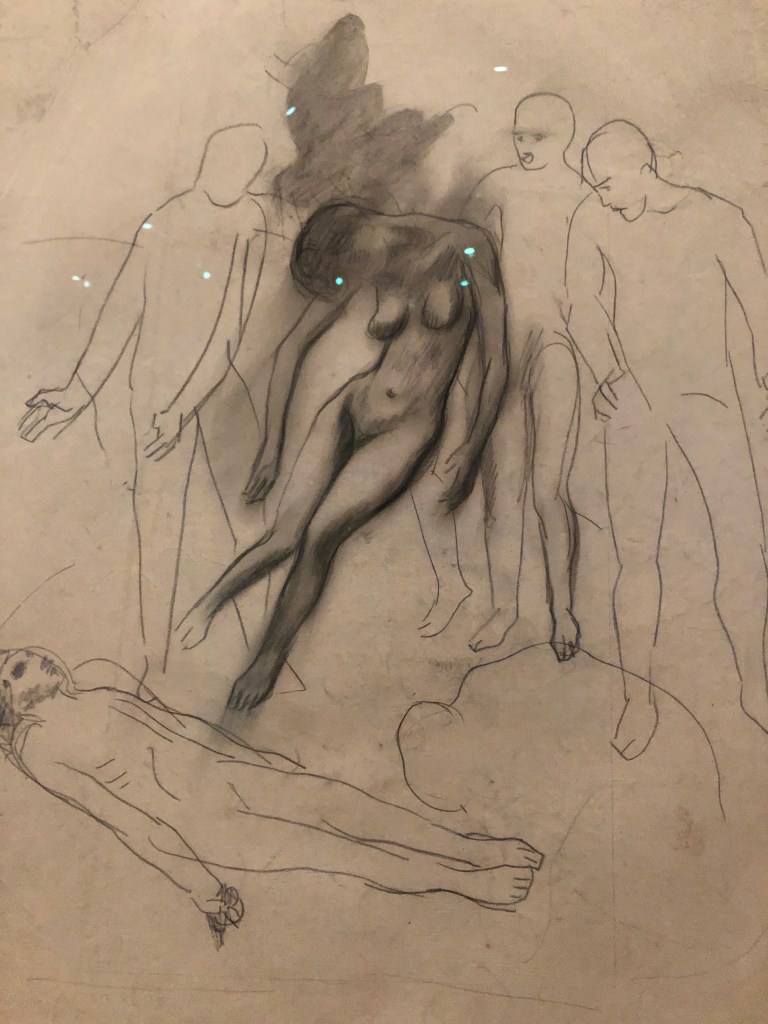
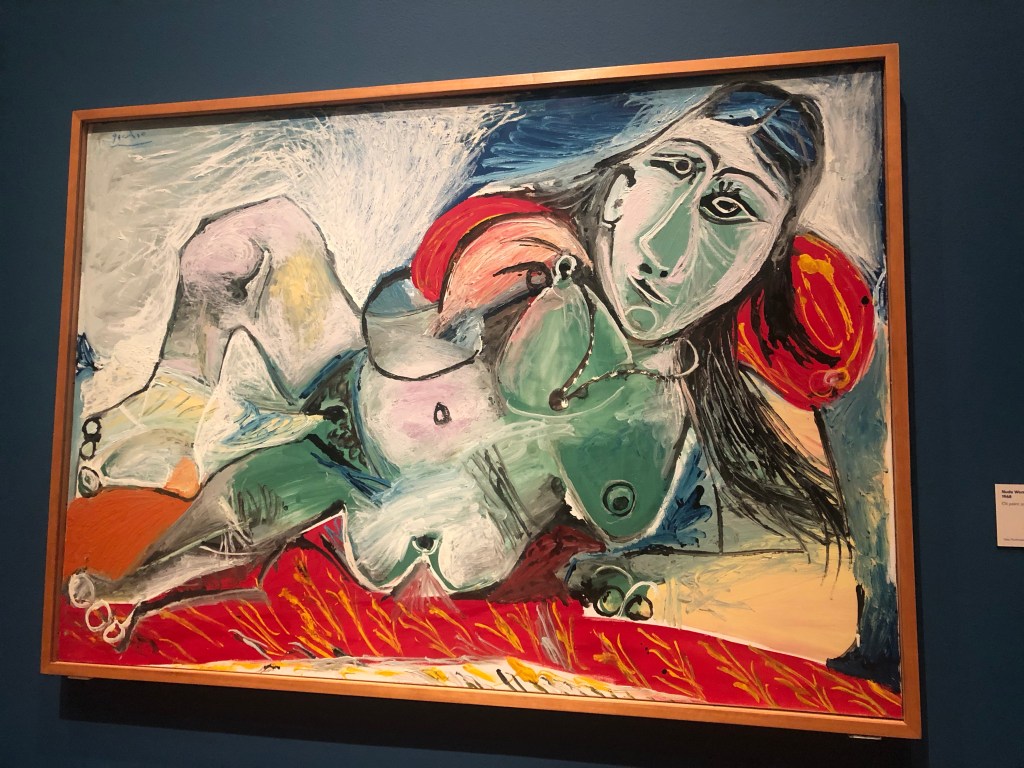
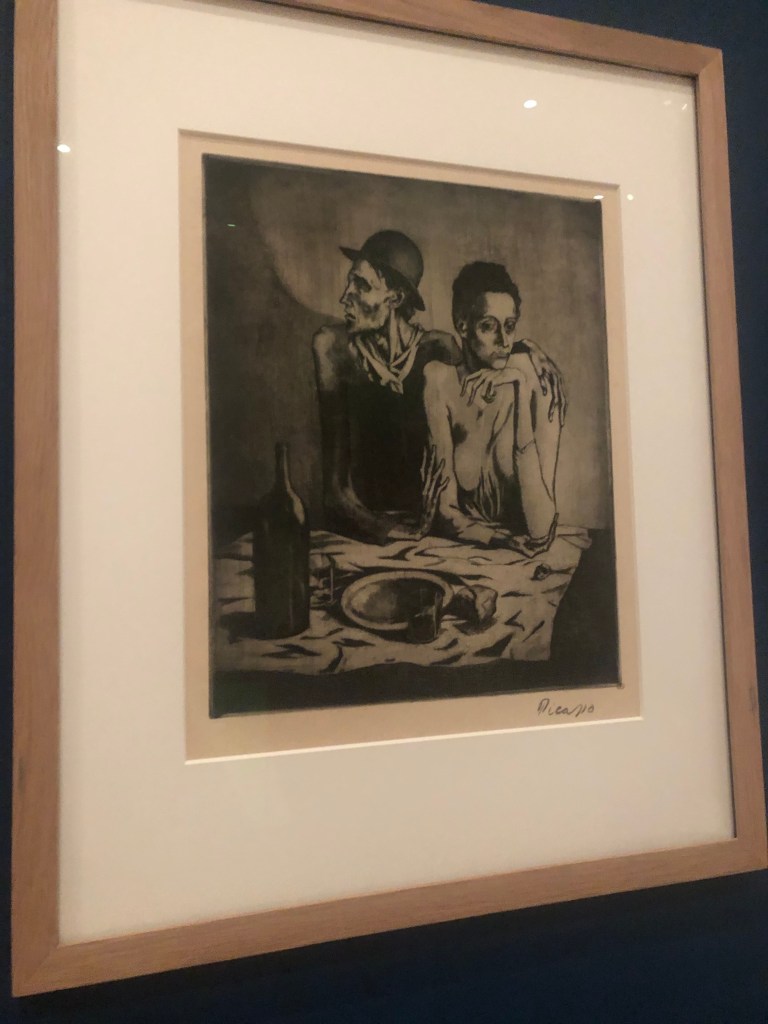
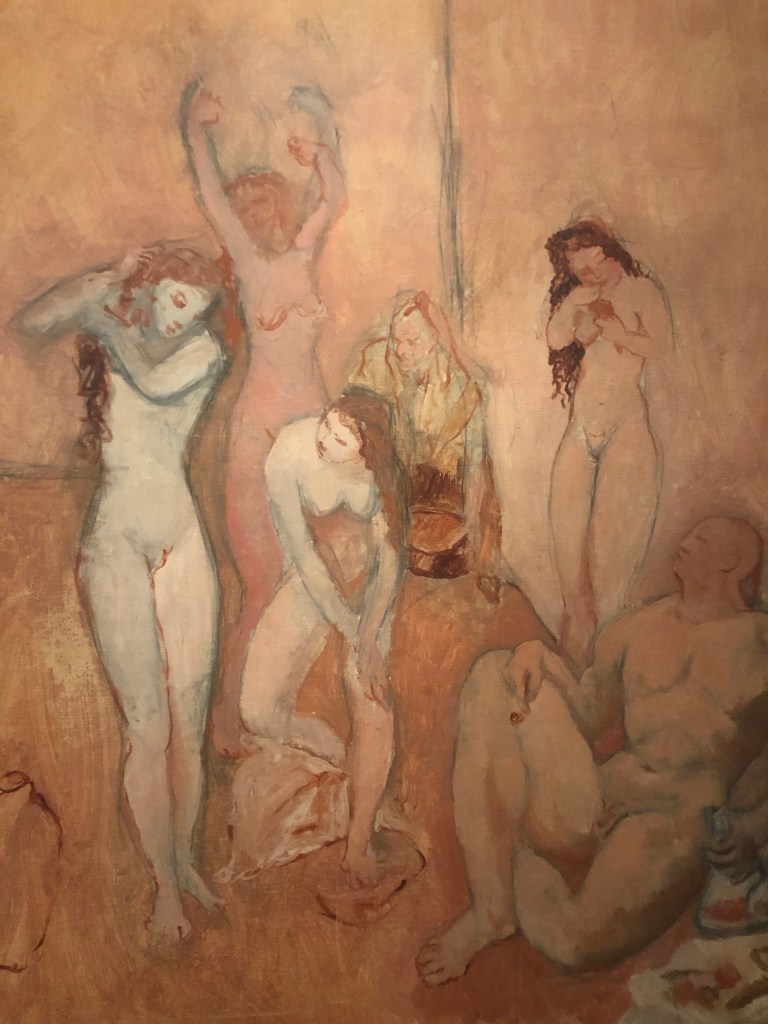
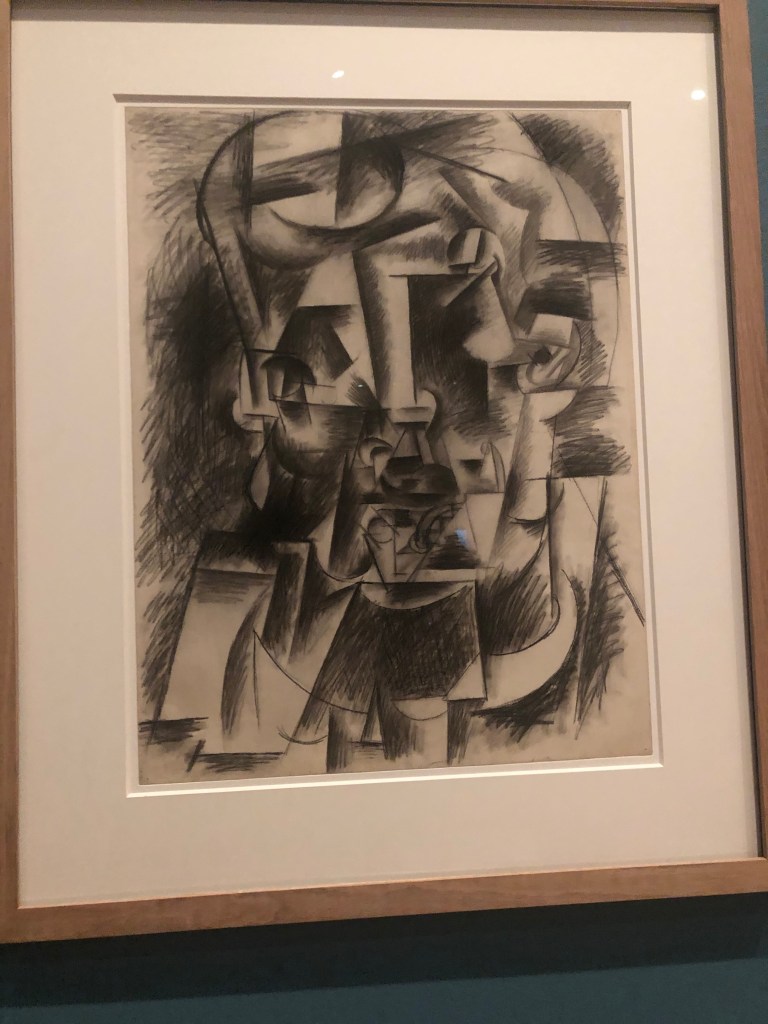
Some of my favorite pictures from the exhibition Picasso and Paper, a collection of Picasso’s greatest works on paper. In this exhibition you could see how Picasso developed how he worked on paper, becoming more experimental with his painting style as he grew older and using a combinations of mediums. In the exhibition videos shown of Picasso, he would start drawing a duck or bird and once he had established the shape of the animal he would add more lines, changing it from an animal to a teapot, face or lady. He allowed himself free expression and liberty to imagine something new out of what was already there. The free flowing and improvisation of his brushstrokes makes up some of his finest work and style, it also made me think of how we as humans are defined by a number of shapes, lines and features. From one person to a thing or animal these same lines and shapes are used in parts to define them, shifting the image in swift motions.
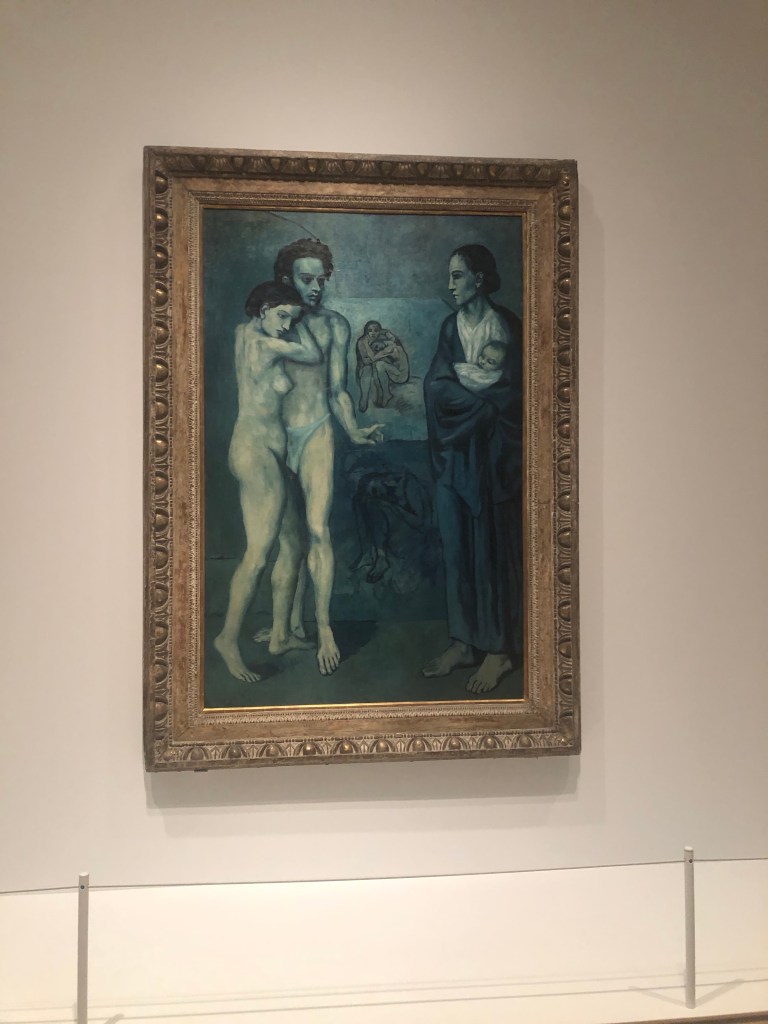
Unlike other artists, Picasso has a very distinct style, there is a range of motion applied to his subjects creating complexity and multiple dimensions to a head or body. The angles created by the lines of the face, bring out the feature and add different emotions, perspective and depth showing the human condition to not be fixed but always in progression. In creating a focus on movement, color and positioning Picasso brings out something intrinsic in what it is to be human; that is to be imperfect.
Picasso’s art uses multiples of the same bodies, positioned side by side or as seen in the background or huddled behind the couple in the last painting. These bodies add feeling and depth to the character’s outside of the fixed structure in which their real bodies take shape. Picasso’s art removes us from the confines of the containers we form; our bodies. The multiplicity of bodies capture how we see ourselves within our own minds, within our subconscious and existing truly as we are at all times.
 RUPA SUCHAK